AI in Ultrasound — What It Means for Patients

AI in Ultrasound — What It Means for Patients

The landscape of diagnostic imaging is undergoing its most significant transformation since the invention of the transducer. For patients visiting a private clinic in London, the experience of an ultrasound scan—the cool gel, the darkened room, and the flickering grayscale images—is being subtly but profoundly enhanced by Artificial Intelligence (AI).

At IUS London, we understand that the term "Artificial Intelligence" can evoke a mix of excitement and apprehension. From a neuro-psychological perspective, patients often experience "technological anxiety" when AI enters the healthcare space, fearing a loss of the human touch or a transition toward "black-box" medicine.

However, AI in ultrasound is not about replacing the clinician; it is about augmenting their expertise. It is a "second pair of eyes" that never gets tired, ensuring that your diagnostic journey is faster, more accurate, and more personalized than ever before.

Understanding the Shift: From Qualitative to Quantitative

Traditionally, ultrasound has been a highly operator-dependent modality. This means the quality of the scan and the accuracy of the diagnosis relied heavily on the individual skill, experience, and even the fatigue levels of the sonographer.

AI shifts this paradigm. By integrating machine learning algorithms directly into the ultrasound hardware, we move from purely qualitative assessments ("the organ looks healthy") to precise quantitative data ("the organ dimensions and blood flow velocities are within the 98th percentile for your demographic").

What is AI Scan Advisor?

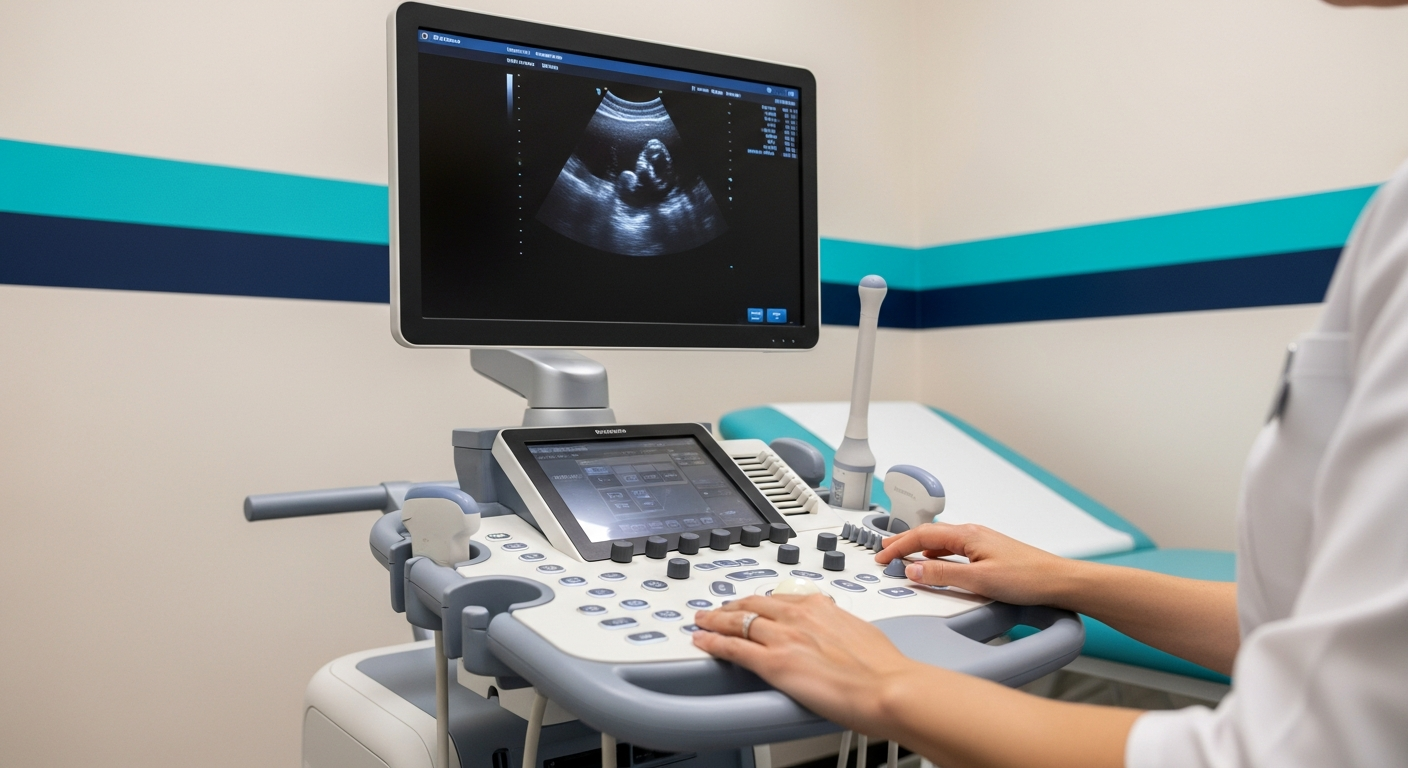
As of July 2026, IUS London has fully integrated the AI Scan Advisor live across our diagnostic suites. This technology acts as a real-time navigation system for the sonographer. It recognizes anatomical landmarks instantaneously, ensuring that every required clinical view is captured with sub-millimeter precision before the scan is even completed.

When to Seek Urgent Medical Attention (Red Flags)

While AI enhances the diagnostic process, it is critical to recognize when a routine ultrasound is not the appropriate first step. If you are experiencing any of the following "red flag" symptoms, please do not book an elective scan. Instead, proceed immediately to your nearest Accident & Emergency (A&E) department or call 999:

  • Sudden, severe abdominal or pelvic pain (potential ectopic pregnancy, appendicitis, or organ perforation).
  • Acute shortness of breath or chest pain (potential pulmonary embolism or cardiac event).
  • Sudden weakness, facial drooping, or speech difficulties (signs of a stroke).
  • Heavy, uncontrollable vaginal bleeding during pregnancy.
  • A palpable, rapidly growing lump accompanied by systemic illness or unexplained weight loss.

Ultrasound is a powerful diagnostic tool, but acute emergencies require immediate hospital intervention.

How AI Augments the Patient Experience

For a patient at the "Awareness" stage of their health journey, understanding the why behind AI is essential. Here is how AI-augmented ultrasound changes your experience at IUS London:

1. Reduced Examination Time

One of the primary stressors for patients is the duration of the scan, particularly if they are required to hold a full bladder or maintain an uncomfortable position. AI algorithms can now automate measurements—such as fetal biometry in pregnancy scans or plaque volume in vascular scans—that previously took several minutes of manual "point-and-click" work. This leads to shorter, more efficient appointments without sacrificing detail.

2. Enhanced Image Clarity (Noise Reduction)

AI-powered "deep learning" filters can distinguish between actual tissue structures and "speckle" artifacts. For the patient, this means the images you see on the screen are clearer and more recognizable, making it easier for the sonographer to explain their findings to you in real-time.

3. Early Detection of Subtle Pathologies

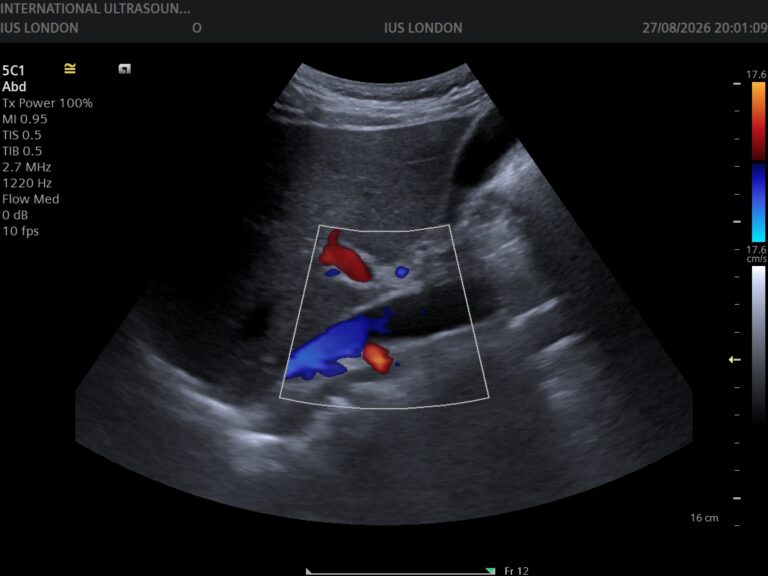
AI models are trained on millions of images, including rare pathologies that a human sonographer might only see once in a decade. By comparing your live scan against this vast database, the AI can flag subtle textural changes in organs like the liver or kidneys that might be missed by the human eye alone, particularly in the early stages of a condition.

From Our Practice: The "Quality Gate" Protocol

>

> At IUS London, we have implemented a proprietary operational decision known as the "AI-Human Quality Gate." We observed that while AI is exceptional at measurement, it lacks the "clinical intuition" required for complex cases.

>

> Consequently, our practice policy dictates that every AI-generated measurement must be "unlocked" and verified by a Senior Sonographer. We use AI to set the baseline, but the final diagnostic weight is always human-led. This ensures that we benefit from the speed of AI while maintaining the bespoke, nuanced care that our London patients expect.

The Human Element: Why the Sonographer is Irreplaceable

A common misconception is that AI will eventually perform the scan autonomously. From a neuro web psychology perspective, the "therapeutic alliance"—the trust between the patient and the clinician—is a vital component of the healing process.

AI cannot:

  • Provide Empathy: AI cannot sense a patient's anxiety or adjust its tone to provide comfort during a stressful pelvic ultrasound.
  • Contextualize History: A computer sees an image; a sonographer sees a patient with a unique medical history, lifestyle, and symptoms.
  • Perform Complex Maneuvers: The physical act of manipulating the transducer to "see around" gas or bone requires human dexterity and real-time problem-solving.

At IUS London, we view AI as a tool—much like a high-powered microscope—that makes our experts even better at what they do.

Comparing Traditional vs. AI-Augmented Ultrasound

FeatureTraditional UltrasoundAI-Augmented Ultrasound (IUS London)
**Measurement Accuracy**Manual; subject to "inter-operator variability."Automated; standardized against global datasets.
**Scan Duration**Longer; manual plotting of data points.Shorter; real-time automated data capture.
**Image Quality**Standard resolution; prone to "speckle" noise.High-definition; AI-enhanced noise reduction.
**Detection Capability**Relies on sonographer's visual recognition.Augmented by pattern-recognition algorithms.
**Patient Feedback**Findings explained after the scan.Real-time visualization and clearer imagery.

AI in Specific Clinical Applications

Cardiovascular and Vascular Health

In carotid artery scans, AI can automatically calculate the "Intima-Media Thickness" (IMT), a key indicator of stroke risk. By removing human error from this measurement, we can provide patients with a much more accurate "vascular age" assessment.

Women’s Health and Fertility

For patients undergoing fertility monitoring, AI can automatically count and measure follicles in the ovaries. This precision is vital for timing interventions and ensuring the best possible outcomes for patients on their reproductive journey.

Abdominal Health

When scanning the liver, AI can assist in quantifying "fatty liver" (steatosis). Rather than a subjective "mild, moderate, or severe" grading, we can provide a more quantitative percentage, allowing for better tracking of health improvements over time. Learn more about our abdominal ultrasound services.

The Neuro-Psychology of Trust in AI

Research in neuro-psychology suggests that patients are more likely to trust AI when it is presented as a collaborative tool rather than a replacement [1]. The "uncanny valley" of healthcare—where technology feels too autonomous—can trigger a cortisol response (stress).

By using the AI Scan Advisor live, we provide a transparent interface. You can see the AI highlighting structures on the screen, which fosters a sense of collaborative discovery. This transparency reduces the "cognitive load" on the patient, making the diagnostic process feel more inclusive and less intimidating.

Safety and Ethics

A frequent question we receive is: "Is AI ultrasound safe?"

The answer is a definitive yes. AI is a software layer that processes the data received by the ultrasound machine. It does not change the nature of the sound waves used, nor does it increase exposure. Ultrasound remains a non-ionizing, safe modality with no known side effects [2].

Furthermore, at IUS London, your data privacy is paramount. All AI processing is performed on secure, encrypted local servers, ensuring that your personal health information remains confidential and compliant with UK GDPR standards.

Conclusion: A New Standard of Care

The integration of AI into ultrasound represents the gold standard of modern diagnostics. For our patients in London, it means higher accuracy, less time in the clinic, and the peace of mind that comes from knowing their health is being evaluated by the most advanced technology available, guided by the most experienced hands.

As we move further into 2026, IUS London remains committed to staying at the forefront of this technological evolution. We don't just use AI because it's new; we use it because it makes our patients safer and our diagnoses more certain.

Book Your AI-Augmented Scan Today

Experience the future of medical imaging in a comfortable, private setting. Whether you require a routine check-up or are investigating a specific symptom, our expert team is here to provide clarity.

Book Your Private Ultrasound Scan at IUS London

References

[1] Topol, E. J. (2019). High-performance medicine: the convergence of human and artificial intelligence. Nature Medicine, 25(1), 44-56. https://doi.org/10.1038/s41591-018-0300-7

[2] NHS England (2023). Artificial Intelligence in Radiology and Diagnostics: Guidance for Clinicians and Patients. https://www.england.nhs.uk/long-read/artificial-intelligence-in-the-nhs/

[3] Brattain, L., et al. (2021). Machine learning for medical ultrasound: status, methods, and future opportunities. Abdominal Radiology, 46, 2199–2206. https://doi.org/10.1007/s00261-020-02781-3

Book Your Private Ultrasound Scan in London

Same-day appointments available in Kensington. No GP referral required. HCPC-registered consultant sonographers.