AI in Ultrasound — What It Means for Patients
Where artificial intelligence genuinely helps in ultrasound, where the claims outrun the evidence, and what it does not change about your appointment.
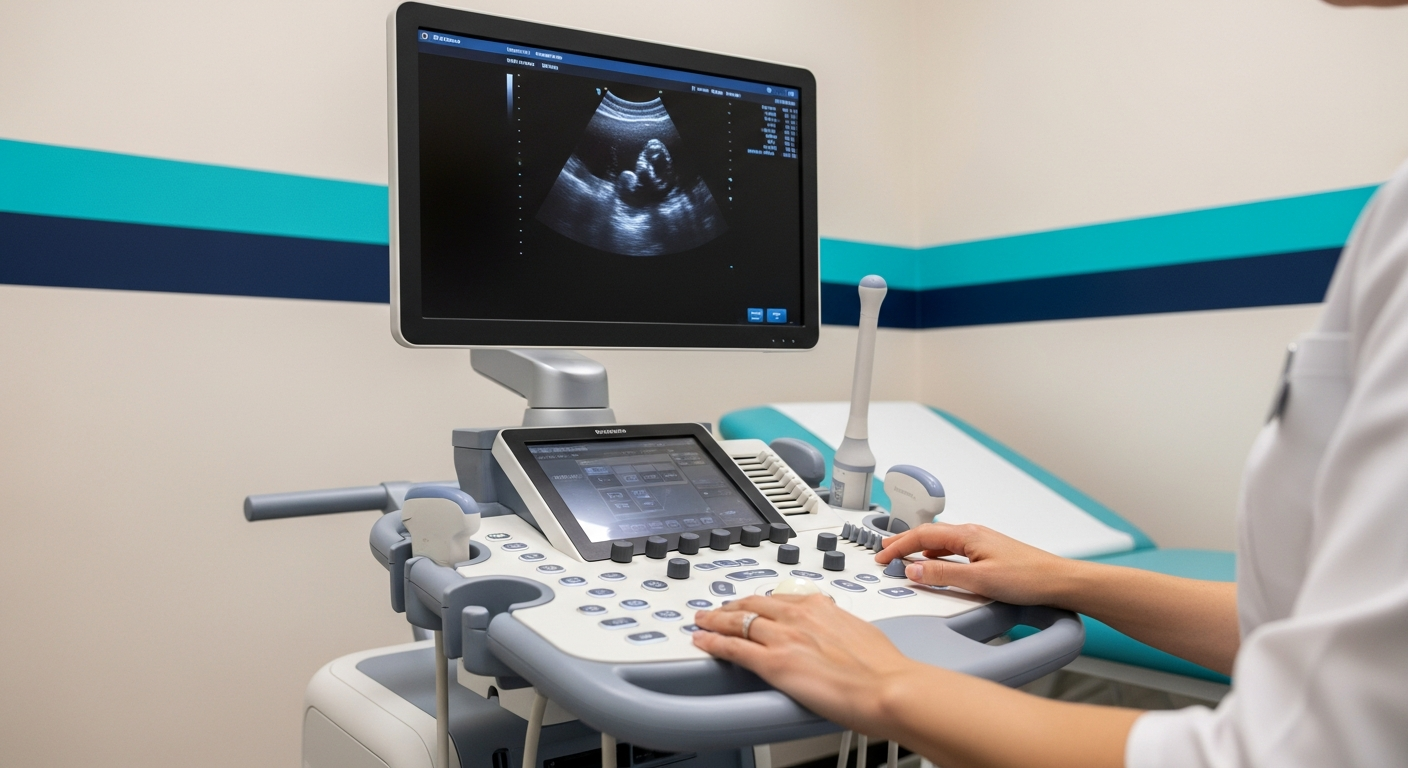
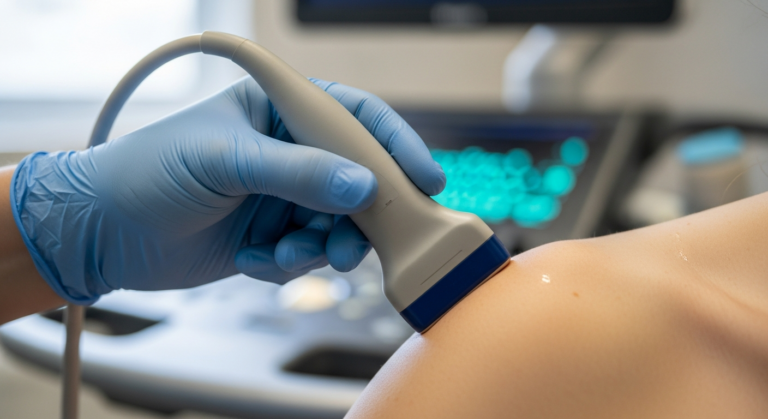
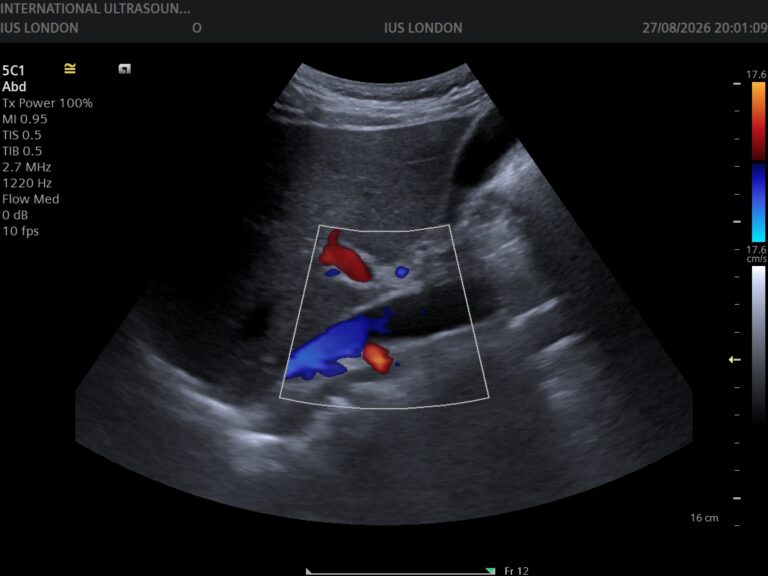
Ultrasound differs from most imaging in one important way: it is operator-dependent. A CT scanner produces the same dataset regardless of who presses the button. An ultrasound image is created live by a person choosing where to place the probe, at what angle, with what settings, and deciding what to look at next based on what has just appeared on screen.
That is the context for every claim about AI in ultrasound. Software can assist with parts of the task, but the parts it can assist with are narrower than the marketing usually suggests.
Where it helps, and where it does not
| Task | Where AI genuinely contributes | What it cannot do |
|---|---|---|
| Measurement | Automating repetitive measurements and reducing variation between operators | Decide which structure is worth measuring |
| Image quality | Noise reduction and image optimisation built into modern machines | Recover an image from a probe pointed at the wrong place |
| Detection prompts | Flagging features for a human to review in specific, narrow applications | Take responsibility for what was never scanned |
| Workflow | Reducing repetitive documentation tasks | Replace the clinical judgement in a report |
| Acquisition | Guidance tools that help less experienced users obtain standard views | Decide to look somewhere unexpected because something felt wrong |
The last row is the one that matters most. AI can only analyse the images it is given. If a lesion was never brought into view, no algorithm will find it — and choosing where to look, based on your symptoms and what appears on screen, remains a human judgement made in real time.
How to read a clinic’s AI claims
“AI-powered” is not a regulated description, and it currently spans everything from routine image processing that has existed for years to genuinely novel software. A few questions cut through it: what specific task does the software perform, has it been through regulatory approval for that task, and does a qualified human still review everything?
To be straightforward about our own position: your scan at IUS London is performed and interpreted by an HCPC-registered sonographer. Modern ultrasound machines include manufacturer-built image optimisation and measurement tools — that is standard equipment across the sector rather than something we would dress up as a selling point. We are not claiming an AI diagnostic capability, because we would rather tell you what actually determines the quality of your scan.
Which is this: who is holding the probe, how much time they spend, and whether they know what your symptoms mean for where to look. A 30-minute appointment with an experienced sonographer who explains findings as they scan is not a technology claim — it is the thing the technology exists to support.
What is plausibly coming
- 1
More automation of measurementReducing variation between operators on repetitive measurements — useful for surveillance, where comparing like with like is the whole point.
- 2
Wider accessAcquisition guidance may let non-specialists obtain adequate images in settings without a sonographer — potentially significant globally, less so in a London clinic.
- 3
Second-reader supportSoftware that flags features for human review, in specific approved applications, with the clinician still deciding.
- 4
Regulation catching upMedical AI requires approval for its specific intended use. That process is what separates a validated tool from a marketing adjective, and it is worth asking about.
Your questions answered
Will AI read my scan instead of a person?
Is an AI-assisted scan more accurate?
Should I choose a clinic advertising AI?
Why is ultrasound harder to automate than CT or MRI?
Could AI miss something a person would catch?
Does IUS London use AI to diagnose?
Where to go from here
What each scan sees best, and which suits your question.
Read the guide →
ReportsUnderstanding Your MSK ReportWhat the descriptive terms mean, and what they do not.
Read the guide →
TeamOur Clinical TeamThe HCPC-registered sonographers who perform your scan.
Meet the team →
Scanned by a person who explains it
A 30-minute appointment with an HCPC-registered sonographer who performs the scan, explains findings on screen as they go, and writes the report — usually with you within two hours.
Kensington, London W8 4ED
3 mins from Notting Hill Gate
This article is general information about imaging technology, not individual medical advice. Scans at IUS London are performed and interpreted by HCPC-registered sonographers; we do not use AI to diagnose.
Written and clinically reviewed by the HCPC-registered sonographers who perform this scan at IUS London — a CQC-registered diagnostic ultrasound clinic (Provider ID 1-2775844974). Your own findings are explained to you at the scan and set out in your report.
Author: Yianni Kiromitis, Senior Sonographer, HCPC RA38415 — over 20 years’ experience in NHS and private ultrasound
Medically reviewed: 9 August 2026