Dense Breasts Explained: Understanding Your Mammogram Results
Book a Private Scan
Same-day appointments · Kensington, London · No GP referral needed
Private Breast Ultrasound Scan
Understanding Dense Breasts: A Patient-Centred Introduction
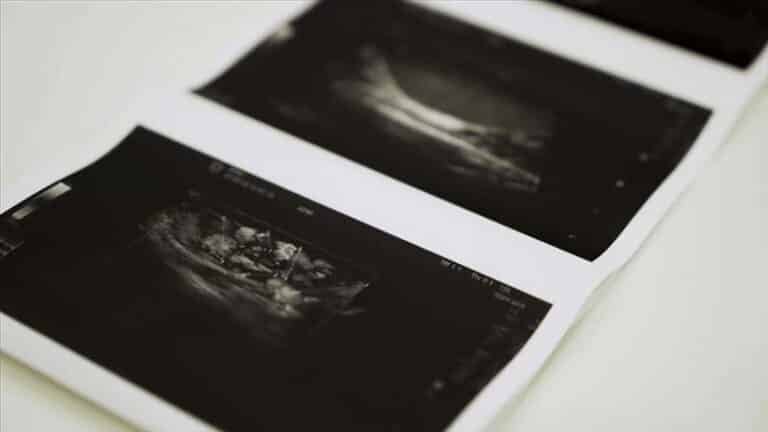
Receiving a mammogram result can sometimes bring new terms to light, and one that often raises questions is ‘dense breasts’. This term refers to how your breast tissue appears on a mammogram, not how your breasts feel to the touch. Understanding breast density is crucial because it can influence the effectiveness of mammography and your overall breast cancer screening strategy. At IUS London, we believe in empowering our patients with clear, complete information to make informed decisions about their health. This article will explain what dense breasts are, why they matter, and the advanced screening options available to ensure the most accurate detection possible.
When to Seek Urgent Medical Attention
While understanding breast density is important for long-term screening, it's vital to recognise immediate red flags that require urgent medical attention. If you experience any of the following symptoms, please contact your GP or a medical professional without delay, regardless of your breast density:
- A new lump or thickening in your breast or armpit.
- A change in the size or shape of one or both breasts.
- Dimpling or puckering of the skin on your breast.
- A nipple that has become inverted (pulled in) or has changed its position or shape.
- A rash or crusting on or around your nipple.
- Discharge from either nipple.
- Constant pain in your breast or armpit.
These symptoms do not necessarily mean you have breast cancer, but they warrant immediate investigation.
Unpacking Breast Density and Its Impact
What is Breast Density?
Breast density describes the proportion of different tissues within your breast. Breasts are composed of glandular tissue (which produces milk), fibrous connective tissue (which holds everything in place), and fatty tissue. On a mammogram, fatty tissue appears dark and transparent, allowing any potential abnormalities (which appear white) to be easily seen. However, glandular and fibrous tissues appear white on a mammogram, similar to how cancerous lumps appear. This makes it harder to detect abnormalities in dense breasts, as the dense tissue can mask them [1].
Breast density is categorised using the Breast Imaging Reporting and Data System (BI-RADS) developed by the American College of Radiology (ACR). These categories range from A to D:
- ACR A: Almost entirely fatty – Breasts are almost entirely composed of fat, making abnormalities easy to spot.
- ACR B: Scattered fibroglandular density – There are some areas of dense tissue, but most of the breast is fatty.
- ACR C: Heterogeneously dense – The breasts are made up of many dense areas, which could obscure small masses.
- ACR D: Extremely dense – The breasts are almost entirely dense, significantly reducing the sensitivity of mammography [3].
Why Does Breast Density Matter for Mammography?
Breast density is significant for two primary reasons:
- Masking Effect: As mentioned, dense breast tissue appears white on a mammogram, just like cancerous tumours. This 'masking effect' can hide cancers, making them difficult to detect [4]. Mandelson and colleagues (2000), comparing interval and screen-detected cancers in a large US screening population, found mammographic sensitivity — the ability of mammography to detect a cancer — was 80% in women with predominantly fatty breasts but 30% in those with extremely dense breasts [4]. A Danish screening programme found the same gradient less steeply, with sensitivity falling from 78% at BI-RADS 1 to 47% at BI-RADS 4 [3].
- Increased Risk: Women with dense breasts have a higher risk of developing breast cancer compared to women with fatty breasts [1, 3]. The exact reasons for this increased risk are still being researched, but it is thought to be related to the higher amount of glandular and fibrous tissue, which are the tissues where cancers typically originate.
Mammographic Sensitivity and Interval Cancers
The reduced sensitivity of mammography in dense breasts leads to a higher rate of 'interval cancers'. These are cancers that are diagnosed between scheduled mammography screenings, often because they were obscured by dense tissue on the previous mammogram [4]. The risk of interval cancer is significantly higher in women with extremely dense breasts [4]. This highlights the critical need for supplemental screening methods for women with higher breast density.
Management, Context, and Pathways for Dense Breasts
Supplemental Screening Options
Given the limitations of mammography in dense breasts, supplemental screening methods are often recommended to improve cancer detection. These include:
- Breast Ultrasound (US): Ultrasound uses sound waves to create images of breast tissue. It can detect additional cancers that are missed by mammography, particularly in dense breasts [2, 6]. While effective, its sensitivity can be operator-dependent, and it may lead to a higher rate of false positives [2, 6].
- Breast MRI (Magnetic Resonance Imaging): MRI is considered the most sensitive supplemental screening tool for women with dense breasts, especially those at higher risk [2, 7, 8]. It uses magnetic fields and radio waves to create detailed images. While highly effective, traditional MRI can be costly and time-consuming. Abbreviated MRI protocols are being developed to address these limitations and improve accessibility [2, 7].
- Contrast-Enhanced Digital Mammography (CEDM): This technique involves injecting a contrast agent before a mammogram, which highlights areas of increased blood flow, often associated with tumours. It shows promise but requires further validation for widespread screening [2].
- Digital Breast Tomosynthesis (DBT): Also known as 3D mammography, DBT takes multiple X-ray images from different angles to create a 3D reconstruction of the breast. While it can reduce recall rates and increase cancer detection compared to 2D mammography, its effectiveness is still limited in extremely dense breasts [2].
Who Needs Supplemental Screening?
The decision for supplemental screening is individualised and depends on several factors, including breast density, personal risk factors for breast cancer, and family history. The American College of Radiology (ACR) Appropriateness Criteria provide guidance on this [8]:
- Average-risk women with non-dense breasts: Mammography alone is generally sufficient.
- Average-risk women with dense breasts: May benefit from supplemental screening with ultrasound, breast MRI, or abbreviated breast MRI [8].
- Intermediate-risk women: May benefit from breast MRI or abbreviated breast MRI, especially if they have dense breasts [8].
- High-risk women (regardless of breast density): Strong evidence supports screening with breast MRI [8].
Shared Decision-Making
EUSOBI (European Society of Breast Imaging) emphasises the importance of shared decision-making. Women should be informed about their breast density and counselled on the benefits and risks of various screening methods to make an informed choice that aligns with their personal values and preferences [1].
From Our Practice
At IUS London in Kensington we provide diagnostic breast ultrasound. We do not offer mammography, breast MRI, tomosynthesis or biopsy — where any of those is the right next test, we say so plainly, and your GP arranges it through a breast clinic where examination, imaging and biopsy happen in a single visit.
What that means in practice if you have been told you have dense breasts: ultrasound is a reasonable supplemental test for a focal concern, it does not replace NHS breast screening, and it does not show the microcalcification that mammography detects. Attend your screening invitation when it arrives. If you have found a lump or noticed a change, that needs your GP promptly rather than a supplemental scan on its own.
Findings are explained on screen as we scan, and the written report — usually with you within two hours — is written so your GP or a breast clinic can act on it directly. Our private breast ultrasound page sets out what the scan covers.
Comparison of Supplemental Screening Methods
| Screening Method | Advantages | Disadvantages | Recommended For | IUS London Service Link |
| Mammography | Gold standard for breast cancer screening; effective in fatty breasts. | Reduced sensitivity in dense breasts; uses ionising radiation. | All women for routine screening. | Not offered here — NHS screening or a breast clinic |
| Breast Ultrasound | No radiation; detects additional cancers in dense breasts; widely available. | Operator-dependent; higher false-positive rate; smaller field of view. | Supplemental screening for dense breasts. | Private Breast Ultrasound Scan |
| Breast MRI | Highest sensitivity for dense breasts and high-risk women; no radiation. | High cost; requires contrast injection; longer scan time; limited availability. | High-risk women; women with extremely dense breasts. | Not offered here — via breast clinic |
| Digital Breast Tomosynthesis (DBT) | Reduces recall rates; improved cancer detection over 2D mammography. | Still limited effectiveness in extremely dense breasts; uses ionising radiation. | Routine screening; may be preferred over 2D mammography. | Not offered here — NHS screening |
Take Control of Your Breast Health: Call to Action
Understanding your breast density is the first step towards a more personalised and effective breast cancer screening strategy. At IUS London, we are dedicated to providing you with the most advanced diagnostic tools and expert care.
If you have been informed that you have dense breasts, or if you have concerns about your breast health, we encourage you to discuss your options with our specialists. We offer a range of supplemental screening services, including Private Breast Ultrasound Scans and Private Breast MRI Scans, tailored to your individual needs.
Contact IUS London today to schedule a consultation or to learn more about our breast screening services.
- Book an appointment: Book Online
- Call us: 020 7101 1700
- Email us: info@iuslondon.co.uk
References
[1] Mann, R., et al. (2022). Breast cancer screening in women with extremely dense breasts recommendations of the European Society of Breast Imaging (EUSOBI). European Radiology.
[2] Vourtsis, A., et al. (2018). Breast Density Implications and Supplemental Screening. European Radiology.
[3] Lynge, E., et al. (2019). Mammographic Density and Screening Sensitivity, Breast Cancer Incidence and Associated Risk Factors in Danish Breast Cancer Screening. Journal of Clinical Medicine.
[4] Mandelson, M., et al. (2000). Breast density as a predictor of mammographic detection: comparison of interval- and screen-detected cancers. Journal of the National Cancer Institute.
[5] von Euler-Chelpin, M. V., et al. (2019). Sensitivity of screening mammography by density and texture: a cohort study from a population-based screening program in Denmark. Breast Cancer Research : BCR.
[6] Yuan, W., et al. (2020). Supplemental breast cancer-screening ultrasonography in women with dense breasts: a systematic review and meta-analysis. British Journal of Cancer.
[7] Sitges, C., et al. (2025). Breast MRI to Screen Women With Extremely Dense Breasts. Journal of Magnetic Resonance Imaging.
[8] Weinstein, S. P., et al. (2021). ACR Appropriateness Criteria® Supplemental Breast Cancer Screening Based on Breast Density. Journal of the American College of Radiology : JACR.