Stroke Risk and Carotid Screening — Who Should Be Scanned?

Stroke Risk and Carotid Screening — Who Should Be Scanned?

Understanding Your Stroke Risk: The Role of Carotid Screening

Stroke is a devastating event that can profoundly impact lives, often leaving lasting physical and cognitive challenges. While many factors contribute to stroke risk, a significant and often preventable cause is the narrowing of the carotid arteries in the neck. These vital blood vessels supply oxygen-rich blood to your brain, and when they become obstructed, the risk of stroke increases considerably. Understanding this connection is the first step towards proactive health management. Carotid screening, typically performed through a non-invasive ultrasound, offers a window into your vascular health, helping to identify potential risks before a critical event occurs. This article will explore who might benefit from carotid screening, the conditions it helps detect, and how it contributes to a comprehensive stroke prevention strategy.

⚠ Red Flags: When to Seek Immediate Medical Attention

Recognising the signs of a stroke or a transient ischaemic attack (TIA), often called a "mini-stroke," is crucial for prompt medical intervention. If you experience any of the following symptoms, seek immediate emergency medical attention by calling 999:

  • Sudden weakness or numbness on one side of your body, affecting your face, arm, or leg.
  • Sudden difficulty speaking or understanding speech (slurred speech, trouble finding words, or inability to comprehend).
  • Sudden confusion or trouble understanding.
  • Sudden trouble seeing in one or both eyes.
  • Sudden severe headache with no known cause.
  • Sudden trouble walking, dizziness, loss of balance, or coordination.

These symptoms, even if they are temporary, could indicate a TIA, which is a strong warning sign of an impending stroke. Early diagnosis and treatment are paramount to preventing more severe outcomes.

Carotid Stenosis: A Silent Threat

Carotid stenosis refers to the narrowing of the carotid arteries, usually due to the build-up of fatty plaques (atherosclerosis). This narrowing can restrict blood flow to the brain, or pieces of plaque can break off and travel to the brain, blocking smaller arteries and causing a stroke. The severity of carotid stenosis is often categorised by the degree of narrowing, with higher degrees posing a greater risk.

Transient Ischaemic Attack (TIA): A Warning Sign

A Transient Ischaemic Attack (TIA), often referred to as a “mini-stroke,” occurs when blood flow to part of the brain is temporarily blocked. Unlike a full stroke, TIA symptoms typically last only a few minutes and resolve completely. However, a TIA is a critical warning sign that you are at a higher risk of having a stroke in the near future. It is essential to seek medical attention immediately after a TIA, as prompt diagnosis and treatment can significantly reduce the risk of a subsequent, more severe stroke.

Stroke Risk Factors and Carotid Artery Disease

Several factors increase an individual\'s risk of developing carotid artery disease and, consequently, stroke. These include:

  • Age: The risk increases with age.
  • High Blood Pressure (Hypertension): Damages artery walls, making them more susceptible to plaque buildup.
  • High Cholesterol: Contributes to the formation of atherosclerotic plaques.
  • Diabetes: Accelerates atherosclerosis.
  • Smoking: Damages blood vessels and promotes plaque formation.
  • Family History: A genetic predisposition to atherosclerosis.
  • Obesity and Lack of Physical Activity: Contribute to other risk factors like high blood pressure and diabetes.

Research highlights the importance of understanding these risk factors. For instance, studies have shown that carotid plaque characteristics, beyond just the degree of stenosis, can predict recurrent ischemic stroke and TIA. [1] This suggests that a more detailed assessment of plaque composition can improve risk stratification and clinical decision-making.

The Role of Intima-Media Thickness (IMT) in Risk Assessment

Beyond identifying discrete plaques, carotid ultrasound can measure the intima-media thickness (IMT) — the combined thickness of the inner two layers of the carotid artery wall. IMT is a validated, non-invasive marker of subclinical atherosclerosis. An increased IMT, even in the absence of visible plaque, is associated with a significantly elevated risk of future cardiovascular events, including stroke and myocardial infarction. IMT measurement adds an important layer of information to carotid screening, particularly in younger patients where discrete plaque may not yet be present but early arterial wall changes are already detectable.

Carotid Screening: Who Should Be Scanned?

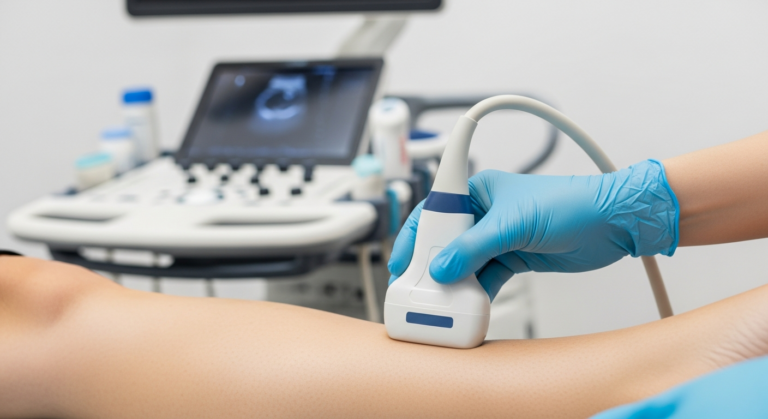
Carotid screening, primarily through carotid duplex ultrasound, is a non-invasive and effective method to assess the health of your carotid arteries. It helps identify narrowing or blockages before they lead to a stroke. But who should consider getting scanned?

Based on current medical guidelines and research, candidates for carotid screening often include individuals with:

  • History of TIA or Stroke: If you have experienced a TIA or stroke, screening is crucial to identify the underlying cause and prevent future events.
  • Presence of a Bruit: A doctor may hear an abnormal whooshing sound (bruit) in your neck during a physical examination, indicating turbulent blood flow through a narrowed carotid artery.
  • Multiple Cardiovascular Risk Factors: Individuals with a combination of risk factors such as high blood pressure, high cholesterol, diabetes, and a history of smoking are at increased risk.
  • Peripheral Artery Disease or Coronary Artery Disease: These conditions often co-exist with carotid artery disease, indicating widespread atherosclerosis.

It\'s important to note that the decision for screening should always be made in consultation with a healthcare professional, who will assess your individual risk profile. While some studies suggest a low risk of ipsilateral stroke in patients with asymptomatic carotid stenosis on best medical treatment, the benefits of early detection in high-risk individuals remain significant. [4]

From Our Practice: A Clinical Insight from IUS London

[SUGGESTED — verify with clinician] At IUS London, we frequently encounter patients presenting with non-specific symptoms such as dizziness or transient visual disturbances, often attributed initially to other causes. A common clinical pattern we observe involves patients, typically over the age of 60, with a history of well-controlled hypertension and hypercholesterolemia, who report intermittent, fleeting episodes of blurred vision in one eye, lasting only a few minutes. While these symptoms might not immediately be recognised as a TIA by the patient, our clinical assessment often prompts a carotid duplex ultrasound. In several such cases, we have identified moderate to severe carotid stenosis, which, once diagnosed, allowed for timely intervention and significantly reduced their stroke risk. This highlights the importance of a thorough clinical evaluation and the role of advanced imaging in uncovering silent vascular disease, even when symptoms are subtle.

Comparing Diagnostic Approaches for Carotid Artery Disease

Diagnostic MethodDescriptionAdvantagesLimitations
**Carotid Duplex Ultrasound**Uses sound waves to create images of the carotid arteries and measure blood flow velocity.Non-invasive, widely available, no radiation exposure, cost-effective.Operator-dependent, may be less accurate in heavily calcified arteries.
**Computed Tomography Angiography (CTA)**Uses X-rays and contrast dye to create detailed 3D images of blood vessels.High resolution, excellent for visualizing plaque morphology and calcification.Requires radiation exposure and contrast dye (potential kidney issues).
**Magnetic Resonance Angiography (MRA)**Uses magnetic fields and radio waves to create detailed images of blood vessels.No radiation exposure, excellent soft tissue contrast, good for visualizing plaque composition.Expensive, time-consuming, contraindicated in patients with certain implants (e.g., pacemakers).
**Digital Subtraction Angiography (DSA)**Invasive procedure using a catheter and contrast dye to visualize blood vessels.Gold standard for assessing stenosis severity, allows for simultaneous intervention (e.g., stenting).Invasive, carries a small risk of stroke or other complications, requires radiation and contrast dye.

Conclusion: Taking Control of Your Vascular Health

Understanding your risk of stroke, particularly in relation to carotid artery health, is a powerful step towards safeguarding your future. Carotid screening, especially for those with identified risk factors or previous neurological events like TIAs, offers invaluable insights, enabling early detection and intervention. By combining regular medical check-ups, lifestyle modifications, and targeted screening when appropriate, you can significantly reduce your stroke risk and maintain optimal brain health. Don\'t wait for symptoms to escalate; proactive management is key.

Take the Next Step: Book Your Private Ultrasound Scan

If you are concerned about your stroke risk, have experienced symptoms suggestive of a TIA, or have multiple cardiovascular risk factors, a private carotid ultrasound scan at IUS London can provide the clarity and reassurance you need. Our expert team uses state-of-the-art equipment to offer comprehensive vascular assessments, helping you understand your carotid artery health and guiding you towards appropriate preventative measures. Take control of your health today.

References

1. D. V. van Dam-Nolen et al., "Carotid Plaque Characteristics Predict Recurrent Ischemic Stroke and TIA: The PARISK (Plaque At RISK) Study." JACC. Cardiovascular imaging, 2022. [https://consensus.app/papers/details/8cd495605dae56bfaa6fd279223899c7/?utm_source=unknown]

2. H. Markus et al., "Severely impaired cerebrovascular reactivity predicts stroke and TIA risk in patients with carotid artery stenosis and occlusion." Brain : a journal of neurology, 2001. [https://consensus.app/papers/details/79ced90832f354639825615e55bcf0e2/?utm_source=unknown]

3. Anna Kopczak et al., "Complicated Carotid Artery Plaques and Risk of Recurrent Ischemic Stroke or TIA." Journal of the American College of Cardiology, 2022. [https://consensus.app/papers/details/f4b97fcdc4f6503fa16d53369d93565c/?utm_source=unknown]

4. L. Marquardt et al., "Low Risk of Ipsilateral Stroke in Patients With Asymptomatic Carotid Stenosis on Best Medical Treatment: A Prospective, Population-Based Study" Stroke, 2010. [https://consensus.app/papers/details/ca7fd041e31652608e287acfc8aa948a/?utm_source=unknown]

Book Your Private Ultrasound Scan in London

Same-day appointments available in Kensington. No GP referral required. HCPC-registered consultant sonographers.