Follicle Tracking Scan in London (Ovulation Monitoring Ultrasound)

A follicle tracking scan (also called follicular tracking or ovulation monitoring ultrasound) is a pelvic ultrasound used to monitor follicle development in the ovaries and assess the uterine lining (endometrium) across your menstrual cycle.

It helps identify your most fertile days and supports accurate timing for natural conception, IUI and IVF monitoring, and ovulation induction protocols.

At International Ultrasound Services in London, follicle tracking scans are performed by experienced consultant sonographers and radiologists, with same-day appointments often available, including evenings and weekends.

Results are explained immediately and can be sent to you and (if requested) directly to your fertility clinic.


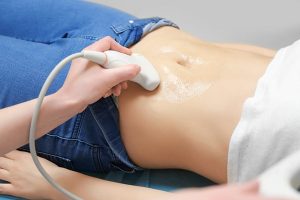
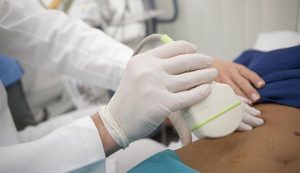
A woman is having a follicular tracking scan in London

At a Glance

Price: £159 (single scan)
Scan type: Usually transvaginal (internal) ultrasound; abdominal scanning can be used where needed
What we measure: follicle size and number, dominant follicle development, endometrial thickness and pattern, and signs of ovulation when present
Timing: scan schedule depends on your cycle length and treatment protocol
Results: explained immediately, with a written report and images (if required) emailed to you
Referral: no GP referral required (self-referral welcome)
Location: 5a Lucerne Mews, London, W8 4ED
Phone: 0203 051 6506

Genuine 5 Star Google Reviews from 300+ patients

google logoInternational Ultrasound ServicesInternational Ultrasound Services
4.9 Stars - Based on 308 User Reviews

A woman is having a follicular tracking scan in London

What is a follicle tracking scan?

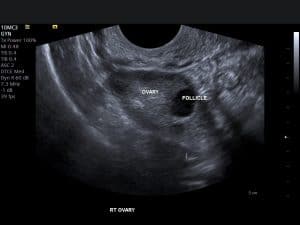
A follicle tracking scan is an ultrasound examination that measures developing follicles in the ovaries. Follicles are fluid-filled sacs that contain eggs. By tracking follicle growth across the cycle, it is possible to estimate the fertile window and predict the timing of ovulation with high accuracy.

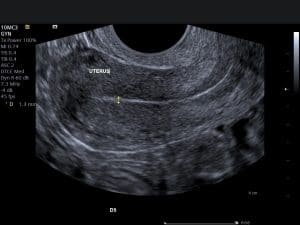
The scan also assesses the thickness and appearance of the endometrial lining, which is where implantation occurs. In many fertility pathways, the combination of follicle maturity and a receptive endometrium helps guide time-sensitive decisions.

A follicle tracking scan (follicular tracking/ovulation monitoring ultrasound) is a pelvic ultrasound used to measure developing ovarian follicles and the uterine lining across the menstrual cycle. The measurements support accurate timing for intercourse, IUI, and fertility treatment monitoring by identifying follicle growth patterns and signs of ovulation.

If you’d like to understand how we interpret key measurements, read Interpreting your follicular tracking scan results

Who is follicle tracking for?

Follicle tracking is recommended for anyone who needs accurate ovulation monitoring, including natural conception and fertility treatment pathways.

Trying to conceive naturally

If you want more precision than calendar estimates, follicle tracking helps identify your most fertile days so you can time intercourse more accurately.

IUI timing

Insemination must be timed closely to ovulation. Follicle tracking provides objective measurements that support scheduling.

IVF monitoring

If you are in an IVF cycle, monitoring can support time-sensitive steps in line with your fertility clinic protocol.

Ovulation induction (e.g., letrozole or clomiphene)

For medicated cycles, follicle tracking monitors ovarian response and supports dose adjustments and timing decisions.

Irregular cycles, PCOS, anovulation

If cycles are irregular, follicle tracking can be particularly helpful for identifying the fertile window and clarifying whether ovulation is likely or has occurred.

Internal link (recommended if you have relevant patient education):
If you have irregular cycles, you may find our PCOS-related guidance helpful  Polycystic Ovary Syndrome (PCOS) and the Role of Follicular Scans

When should I book? (cycle timing)

Follicle tracking is cycle-dependent, and the best schedule varies based on your cycle length and whether you are following a fertility clinic protocol.

Typical first scan timing (example guidance)

For a typical 28-day cycle, the first scan is often performed around day 9–10 to establish baseline follicle size and endometrial thickness.

Follow-up scans

Follow-up scans are then scheduled every few days until ovulation is expected. In some protocols (including certain medicated or IVF pathways), monitoring may become more frequent towards the end of the cycle.

If you have a clinic protocol

If your fertility specialist has provided monitoring instructions, please share them. We will align timing and reporting to your clinic’s requirements.

What we measure (and what it means)

During follicle tracking, we record:

  • Follicles: number of follicles in each ovary

  • Follicle size: measurements of follicles in millimetres

  • Dominant follicle: presence and size of a leading follicle, when present

  • Endometrium thickness: thickness in millimetres

  • Endometrial pattern: appearance/pattern where relevant to cycle assessment

  • Signs of ovulation: where applicable (for example, changes that may suggest ovulation has occurred)

These measurements support fertility planning and monitoring, particularly when decisions are time-sensitive.

For more information on endometrial measurements, see Endometrial thickness.

What happens during the appointment?

On arrival, you will be welcomed by the clinic team and shown to a private ultrasound room. The sonographer will confirm your cycle day and any relevant treatment details and explain the procedure.

Transvaginal (internal) scan

Most follicle tracking scans are performed transvaginally because it provides a detailed view of the ovaries and uterus. A covered and lubricated probe is inserted a short distance into the vagina. The scan is usually painless, though some patients may feel mild pressure.

Abdominal scan (when needed)

If a transvaginal scan is not suitable, an abdominal approach can be used. Gel is applied to the lower abdomen and a transducer is moved gently over the skin.

How long does it take?

The scanning component is typically brief. Please allow additional time for check-in and for your results to be explained.

Preparation

Preparation is straightforward. For most follicle tracking scans, a full bladder is not required, as the best view is usually achieved with a transvaginal approach.

  • Wear comfortable clothing that is easy to change out of

  • Bring any fertility clinic instructions or treatment plan (if applicable)

  • If you are using fertility medication, bring the drug name, dose, and start date (or a photo of the packaging)

For general clinic guidance, see Preparation for your scan.

Results, report, and sharing with your clinic

Results are explained immediately after the scan. Your sonographer will talk you through the findings and can show you images if you wish.

You will receive a written report including key measurements such as:

  • follicle sizes and number per ovary

  • endometrial thickness (mm)

  • endometrial pattern (where applicable)

  • signs of ovulation, if applicable

  • selected images if required

Your report is emailed to you and can be sent directly to your fertility clinic.

Internal link (recommended):
Read more about how we provide reports in Scan results and reports.

What this scan can and can’t tell you

What follicle tracking can help with

  • Identifying the likely fertile window by monitoring follicle growth

  • Supporting timing for intercourse, IUI, and fertility treatment milestones

  • Monitoring response to ovulation induction medication

  • Highlighting potential cycle issues early (for example, poor follicular growth or thin lining), so your care plan can be reviewed promptly

What follicle tracking does not replace

  • It does not replace fertility specialist decision-making or your clinic protocol

  • It does not assess tubal patency (whether fallopian tubes are open) or male factor fertility

  • It is not a standalone diagnostic for all causes of infertility; it is a focused monitoring scan used as part of a wider plan

Comparisons (to help you choose the right scan)

Follicle tracking vs Antral Follicle Count (AFC)

These scans answer different questions:

  • Follicle tracking (this scan): a dynamic process across one cycle that helps answer “When will I ovulate?”

  • AFC scan: a one-off scan (often days 2–5 of the cycle) that helps answer “What is my ovarian reserve (egg count)?”


Learn more about an Antral Follicle Count (AFC) Scan.

Follicle tracking vs ovulation predictor kits (OPKs)

  • OPKs: detect an LH surge in urine, suggesting ovulation may be approaching

  • Follicle tracking ultrasound: visualises follicle development and the endometrium directly, supporting more precise clinical timing—particularly helpful for irregular cycles or medicated protocols

Follicle tracking vs pelvic ultrasound

A pelvic ultrasound is typically used for broader assessment of uterine and ovarian health. Follicle tracking is specifically designed for time-based monitoring of follicle growth and lining changes across the cycle.

Internal link (recommended):
If you need a broader assessment, view our Pelvic ultrasound service.

Benefits of Follicle Tracking Ultrasound

  • Identifies the exact timing of ovulation for natural conception.

  • Enables fertility specialists to plan insemination or egg retrieval with precision.

  • Monitors response to ovulation induction medication, helping to adjust doses.

  • Reduces the need for repeated hormone blood tests.

  • Detects potential issues early, such as poor follicular growth or thin endometrial lining, so treatment can be adapted quickly.

Price

A single follicle tracking scan is £159.

What’s included

  • Ultrasound examination

  • Explanation of results on the day

  • Written report with images

Multiple scans in one cycle

Package pricing is available for patients requiring multiple scans within the same cycle. Please contact the clinic for details.

How to book

Book online or by phone. Same-day bookings are often available, which can be particularly helpful for time-sensitive fertility monitoring.

Phone: 0203 051 6506

Payment methods

We accept deposits via credit card, debit card, PayPal (no PayPal account required), or bank transfer.

If for any reason you finding it difficult to pay the deposit online please let us.

Follicle Tracking Ultrasound Appointments

Private Ultrasound Clinic, London 

Where to get a private ultrasound scan:

Address: International Ultrasound Services  — Private Ultrasound Clinic
5a Lucerne Mews, London,
W8 4ED,
Greater London,
United Kingdom.

Accessibility: The location of the clinic is on the ground floor and, therefore, has wheelchair accessible entrance.

Directions: A 3-minute walk from Notting Hill Gate tube station. Our clinic is on the ground floor with full wheelchair accessibility.

Nearest tube: Notting Hill Gate
Telephone: 0203 051 6506 or 0753 929 0816
E-mail: info@iuslondon.co.uk

Get Directions in Google Maps.

Ultrasound Appointment Bookings:

Monday – Friday: 9 am-8 pm
Saturday: 10 am-1 pm
Sunday: Subject to Availability

Frequently asked questions

How many follicle tracking scans will I need?

Many cycles require two to three scans. IVF and some medicated cycles can require more frequent monitoring towards the end. Your plan is adjusted based on what we see and your clinic protocol.

When is the best time to have the first follicle tracking scan?

For a natural cycle, the first scan is often around day 9–10 (for a 28-day cycle). Your fertility specialist may adjust timing based on your cycle length and treatment plan.

Do I need a GP referral?

No. Self-referral is accepted. If you are under a fertility specialist, we can send results directly to them on request.

Is the scan painful?

Transvaginal scanning is usually painless and takes only a few minutes. Some people experience mild pressure.

Do I need a full bladder?

Usually not. Follicle tracking is most often performed transvaginally, and a full bladder is typically not required.

Can you send my report to my fertility clinic?

Yes. Your written report is emailed to you and can also be sent directly to your fertility specialist if you request this.

What will the report include?

The report includes follicle sizes and number per ovary, endometrial thickness (mm), endometrial pattern (where applicable), and signs of ovulation if present, alongside selected images.

What if I’m taking letrozole or clomiphene?

Please bring your medication name, dose, and start date (or a note/photo). Tracking is commonly used in medicated cycles to monitor response.

What if I have irregular cycles or PCOS?

Follicle tracking can be particularly useful in irregular cycles because it provides objective monitoring of follicle growth rather than relying on calendar timing alone.

What if something unexpected is seen on the scan?

We will explain what we can see during the appointment and document relevant findings in the report. If further assessment is needed, we will advise appropriate next steps (often via your fertility clinic or GP, depending on context).

Related Fertility Scans

International Ultrasound Services also offers:

Other Ultrasound Scans for Women we offer:

We offer a large selection of ultrasound scans for women in London.

Fertility Health Insights