Neck Lump — Thyroid, Lymph Node or Something Else?
Where it sits and how it behaves usually identifies it. Most neck lumps are harmless — and the ones that persist still need looking at.
The neck is crowded: thyroid, dozens of lymph nodes, salivary glands, and various cysts that arise from structures present before birth. Most lumps are reactive lymph nodes swelling in response to an infection, and they settle within a few weeks. The useful question is not whether a lump is alarming, but whether it is behaving like a temporary one.
See your GP about a lump lasting more than three weeks
Go sooner if the lump is hard and fixed, if it is growing, or if it comes with a hoarse voice lasting over three weeks, difficulty swallowing, unexplained weight loss, or night sweats. These are symptoms the NHS assesses on an urgent pathway. Seek same-day care for a rapidly swelling neck with difficulty breathing or swallowing.
Where it sits, and what that suggests
| Where and how it behaves | Commonly |
|---|---|
| Front of the neck, moves upward when you swallow | Thyroid nodule or goitre |
| Side of the neck, tender, appeared with a cold or sore throat, shrinking over weeks | Reactive lymph node |
| Side of the neck, painless, firm, persisting or growing over weeks | Needs assessment — see your GP |
| Just below the jaw, swelling and pain worse when eating | Salivary gland, often a stone or infection |
| Midline, moves when you stick your tongue out | Thyroglossal cyst |
| Soft, mobile, slow-growing, painless under the skin | Lipoma or sebaceous cyst |
What ultrasound settles — and where it stops
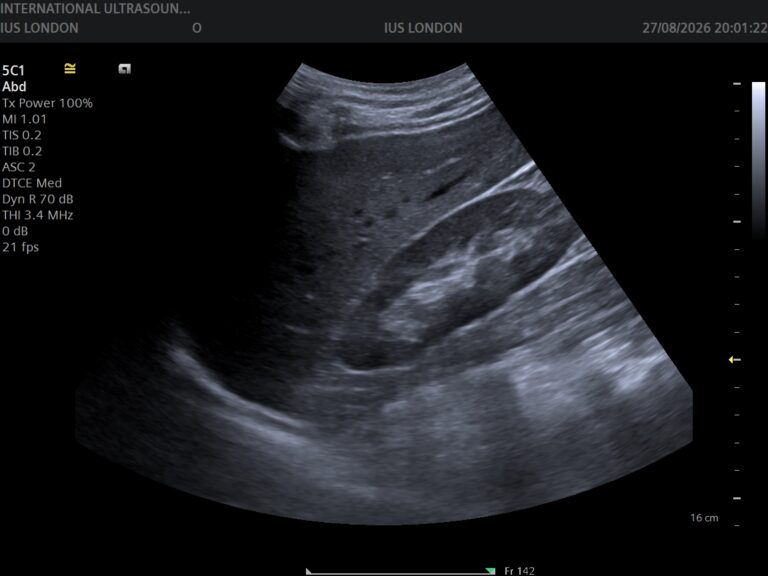
The neck is ideal ultrasound territory: everything of interest sits within a few centimetres of the surface. A scan identifies which structure a lump belongs to, measures it, and describes the features that matter — whether a thyroid nodule is solid or cystic, its margins and calcification, and whether lymph nodes retain their normal architecture or look abnormal.
Thyroid nodules are extremely common and the substantial majority are benign, particularly the small ones found by accident. Their appearance on ultrasound is used to decide which need a fine needle aspiration — a small sample taken with a needle — because that is the only way to classify a nodule definitively. We do not perform FNA, and no scan replaces it.
Ultrasound also cannot tell you how your thyroid is functioning. Tiredness, weight change and feeling too hot or cold are questions for thyroid blood tests through your GP, not imaging. A gland can look entirely normal while its hormone levels are not, and vice versa.
How the appointment runs
- 1
BookingNo referral, no preparation, 30 minutes. Wear something with an open neckline if you can.
- 2
The scanLying back with a pillow under the shoulders and the neck gently extended. Warm gel and a small probe — painless, and we work around any tenderness.
- 3
What we assessThe whole thyroid, any nodule measured and characterised, lymph nodes throughout the neck, salivary glands, and any other lump you have noticed.
- 4
ResultsExplained on screen as we scan, written report usually within two hours — and if a nodule needs FNA or blood tests, the report says so for your GP to act on.
Your questions answered
Are thyroid nodules usually cancer?
Can a scan tell me if my thyroid is underactive?
How long should I wait before getting a lump checked?
Do you do fine needle aspiration?
Can ultrasound tell a normal lymph node from an abnormal one?
My lump moves when I swallow. What does that mean?
Where to go from here
Know which structure it is
Thyroid, lymph nodes throughout the neck and salivary glands assessed in one 30-minute appointment — every lump measured and characterised, explained on screen as we scan, report usually within two hours.
Kensington, London W8 4ED
3 mins from Notting Hill Gate
This article is general information about neck lumps, not individual medical advice. A lump lasting more than three weeks, or one with hoarseness, swallowing difficulty or weight loss, should be assessed by your GP — see NHS guidance on swollen glands and thyroid cancer. We do not offer fine needle aspiration, biopsy or blood tests.
Written and clinically reviewed by the HCPC-registered sonographers who perform this scan at IUS London — a CQC-registered diagnostic ultrasound clinic (Provider ID 1-2775844974). Your own findings are explained to you at the scan and set out in your report.
Author: Yianni Kiromitis, Senior Sonographer, HCPC RA38415 — over 20 years’ experience in NHS and private ultrasound
Medically reviewed: 9 August 2026