
Annual Well-Woman Ultrasound — What It Covers and When to Repeat
A yearly ultrasound check of your abdomen, pelvis, urinary tract, aorta and thyroid — and a baseline your sonographer can compare against, year after year.
- Self-referral — no GP letter needed
- 30–45 minute appointment in Kensington, W8
- Preliminary findings discussed at your scan; written report within 24 hours
How often should you have a well-woman ultrasound?
Most women who use our well-woman ultrasound scan as a health check repeat it once a year. There is no national rule that sets this interval — an annual scan is a personal choice, not an NHS requirement. But in our practice, the women who return each year get something a one-off scan cannot give: a baseline. Each new scan is compared against the last, so we are no longer asking "is this normal?" in isolation — we are asking "has anything changed?"
Some findings need checking more often than yearly, and some symptoms should never wait for your next annual appointment. This page explains what the annual scan covers, why the yearly comparison matters, when a shorter interval is advised, and the warning signs that need attention now.
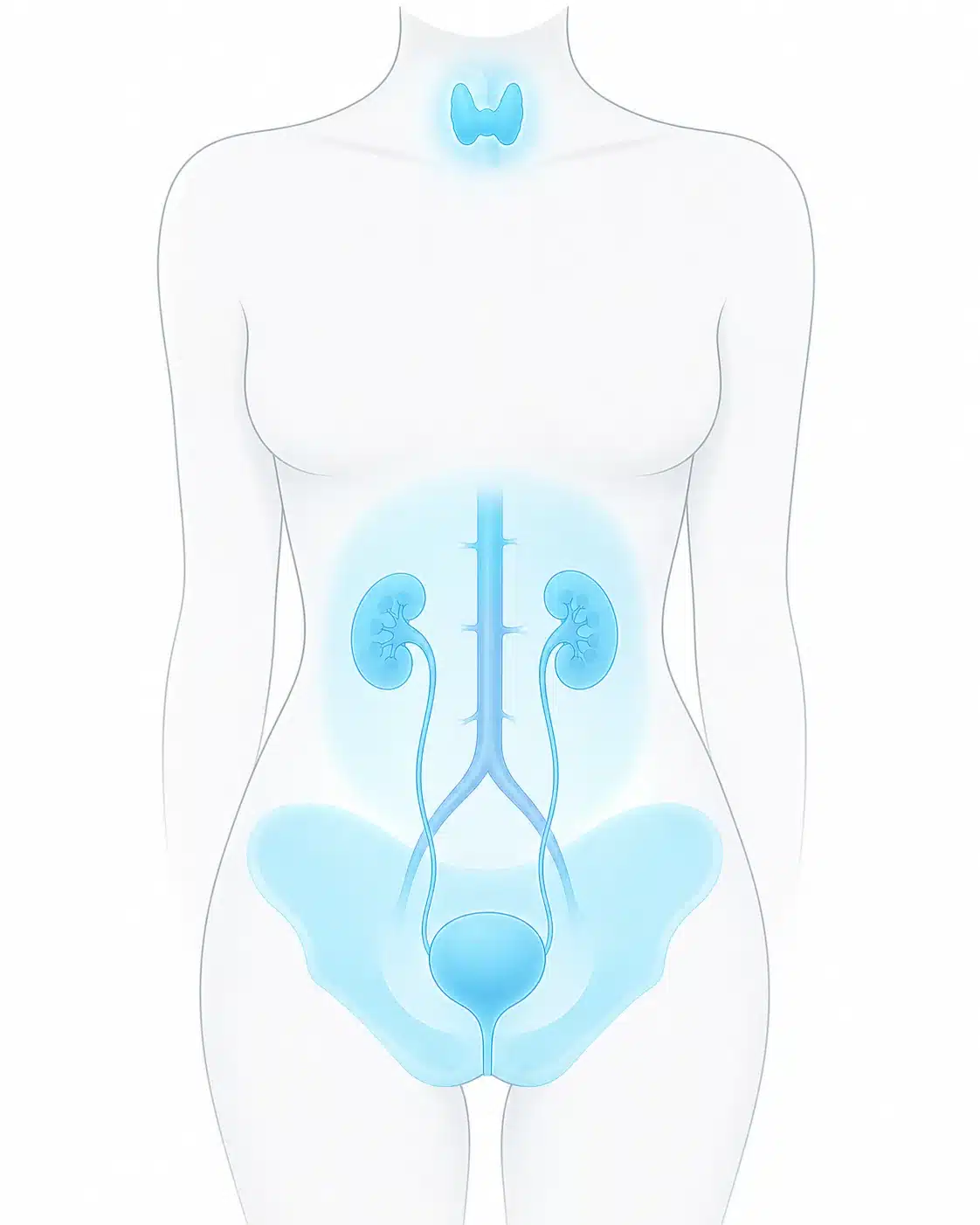
What the annual scan covers
The same five areas are checked at every visit, so each year's images can be compared directly with the last. The well-woman scan page explains each area in full detail.
Why a yearly interval — what your baseline changes
A first scan is a snapshot. It can tell you whether everything looks within normal limits on that day — and for many women that reassurance is exactly what they want. A repeat scan a year later does something different: it turns that snapshot into a comparison.
Many common findings in women's health are not "normal or abnormal" — they are things to watch. A small fibroid, a simple ovarian cyst, a tiny thyroid nodule. What matters most with these is not that they exist, but whether they are stable, growing, or changing. That question can only be answered with a prior scan to compare against. An annual interval is frequent enough to pick up meaningful change, without turning routine health checks into a source of constant worry.
One honest limit: no screening test finds everything, and a clear scan is not a guarantee of health. An annual ultrasound works alongside your NHS screening invitations and your GP — it does not replace them. If you are unsure whether this scan is right for you, we are happy to talk it through before you book, and your GP can advise based on your history.
What we see in women who return every year
Over the years, one of the most valuable patterns we see is in women who return annually for their scans. What changes between scans is often subtle, but clinically significant. We are not just looking for obvious disease — we are tracking progression, stability, and deviation from that individual woman's norm.
Small fibroids may grow slightly. Ovarian cysts may resolve or recur. The thickness of the womb lining may fluctuate with age or hormonal changes, and breast tissue patterns can evolve. None of these changes is necessarily alarming on its own — but with a prior scan, we are no longer interpreting findings in a vacuum. On a first scan we ask, "is this within normal limits?" On a follow-up we ask, "is this the same, better, or different?" That shift lets us pick up early changes that might otherwise be dismissed or missed.
In practical terms, the baseline means we can identify growth trends in fibroids or cysts earlier; distinguish stable, benign findings from those that need further investigation; escalate care sooner when something does change; and reduce unnecessary anxiety — because we can confidently say, "this hasn't changed since last year." That longitudinal view is far more powerful than any single scan: it turns ultrasound from a one-off diagnostic test into a monitoring strategy for your long-term health.
This is a generalised pattern from our women's imaging casebook, not an individual case. Every woman's situation is different — findings on your scan are always discussed with you individually, and anything that needs further assessment is referred on with a written report you can take to your GP or specialist.
When you may need scans more often than once a year
Annual is a good default for general health checks — but some findings have their own follow-up timetables, and your sonographer will tell you at your scan if a shorter interval is advised for you. Common examples:
-
Fibroids being monitoredFibroids that are growing or causing symptoms may need review sooner than a year. See how often fibroids should be scanned.
-
Thyroid nodules under surveillanceSome nodules are rechecked at set intervals after the first finding. See thyroid nodule follow-up intervals.
-
A dilated aortaIf the aorta measures above normal, it is monitored on a defined schedule rather than yearly. See AAA surveillance intervals.
-
Ovarian cysts under reviewSome cysts are rescanned after a few months to confirm they have resolved or stayed stable — your report will say if this applies to you.
How this fits alongside NHS screening
The NHS runs excellent national screening programmes — but for most women under 65, none of them looks at the organs this scan covers. The annual well-woman ultrasound fills that gap by choice; it does not replace any NHS invitation you receive, and you should always attend those.
Some symptoms need assessment now, not at your next yearly check. Contact your GP promptly — or call NHS 111 if you cannot reach them — if you have: bleeding after the menopause, bleeding between periods or after sex, a new lump in the breast, neck or elsewhere, persistent bloating or tummy pain lasting more than a few weeks, blood in your urine, or unexplained weight loss. If you ever have severe sudden pain, heavy bleeding, chest pain or feel seriously unwell, call 999 or go to A&E. A booked private scan is never a reason to delay urgent NHS care.
Annual well-woman scan — your questions answered
NHS screening facts on this page are drawn from NHS: Who breast screening is for (accessed 22 July 2026) and NHS: Abdominal aortic aneurysm screening (accessed 22 July 2026). The practice pattern described above comes from IUS London's women's imaging casebook. Scans are performed by HCPC-registered sonographers at our CQC-registered clinic. This page is for general information and is not a substitute for individual medical advice — always discuss your own screening needs with a healthcare professional.
Author: Yianni Kiromitis, Senior Sonographer, HCPC RA38415.
Medically reviewed by: Yianni Kiromitis, Senior Sonographer, HCPC RA38415 — 22 July 2026. Last reviewed: 22 July 2026.